
 moonScan




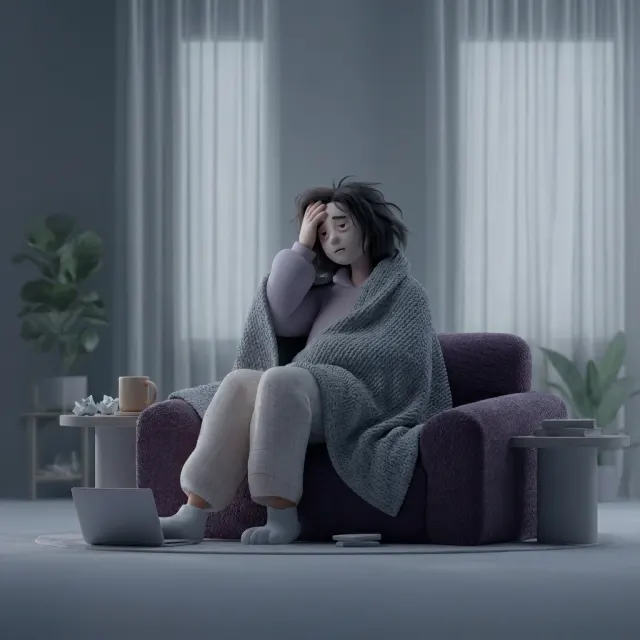
Without your dots
You track your steps, your sleep, your money. But not the body running all of it.
Stress and exhaustion build quietly. One minute with your phone each morning shows your heart rate, HRV and breathing. No watch or ring.
Who it's for
Sound familiar?
Tick what sounds like you.
No matter how much I sleep, I wake up tired.
My head never switches off.
I'm doing everything right, and I can't tell if it's working.
I want to stay well for the people I love.
Why it matters
You feel fine. Until one day you don't.
Poor sleep, stress and running on empty build quietly. One ordinary morning at a time.

With your dots
Morning heart rate over 8 weeks. Example values.
What your dots are really about.
HRV and breathing when the signal is clear.Sleep
Heart rate · HRV
Morning HRV
You never find out what's ruining your nights.
See what's stealing your sleep. Even that one glass of wine.
Energy
HRV · Heart rate
Morning HRV
You run on empty until you crash.
Know when to push and when to rest.
Fitness
Heart rate · HRV
Resting heart rate
You train hard and can't tell if it's working.
Watch your resting heart rate fall as you get fitter.
Stress
HRV
Morning HRV
Stress piles up quietly until you can't take any more.
See it in your dots, not just in your mood.
Cycle and hormones
Heart rate · Breathing
Resting heart rate
The hard days catch you off guard, every month.
Learn your own pattern and plan around it.
Immunity
Heart rate · Breathing
Resting heart rate
You push on until it puts you in bed.
When a morning is off your normal, you know to slow down.
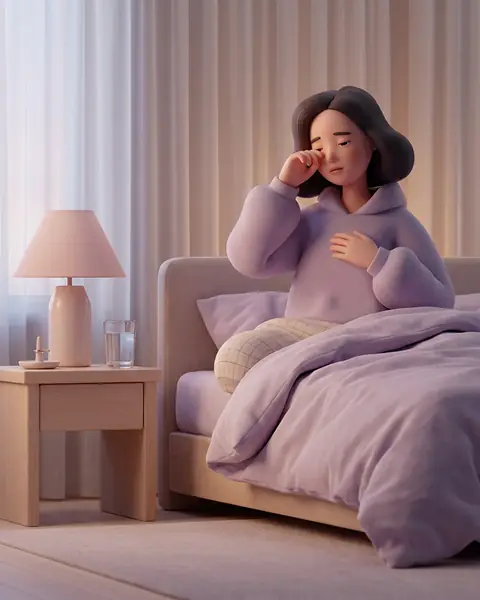





the risk of dying from heart disease for adults whose resting heart rate crept from under 70 to over 85 within about 10 years, compared with those who stayed under 70.
It creeps in quietly. One morning at a time.
higher risk of dying for every 10 extra beats a minute at rest
Every 10 beats counts.
the risk of a first heart attack, stroke or similar event with the lowest HRV
Steady as a clock is not a good sign.
Know your dots.
Stop guessing. See the plansWhat the studies say
Resting heart rate was measured twice, about 10 years apart, in 29,325 adults in Norway without known heart disease, who were then followed for about 12 more years. A rise from under 70 to over 85: hazard ratio 1.9 (95% CI 1.0–3.6) for death from ischemic heart disease; a rise from 70–85 to over 85: 1.8 (1.2–2.8). A long-term association, not an early warning from one morning scan.
Nauman J et al. Temporal changes in resting heart rate and deaths from ischemic heart disease. JAMA, 2011.A meta-analysis of 46 studies with 1,246,203 adults from the general population. Every 10 bpm higher resting heart rate went with a relative risk of 1.09 (95% CI 1.07–1.12) for death from any cause and 1.08 (1.06–1.10) for cardiovascular death. Compared with the lowest group, over 80 bpm: 1.45 (1.34–1.57) for death from any cause. Observational studies that differed from one another; an association, not proof that lowering your heart rate changes your risk.
Zhang D, Shen X, Qi X. Resting heart rate and all-cause and cardiovascular mortality in the general population: a meta-analysis. CMAJ, 2016.A meta-analysis of 8 studies with 21,988 people without known cardiovascular disease. Lowest versus highest HRV (SDNN): relative risk 1.35 (95% CI 1.10–1.67) for a first fatal or non-fatal cardiovascular event; across HRV measures, a 32–45% higher risk. HRV was measured from ECG recordings, not a camera scan, and moonScan does not assess cardiovascular risk.
Hillebrand S et al. Heart rate variability and first cardiovascular event in populations without known cardiovascular disease: meta-analysis and dose–response meta-regression. Europace, 2013.Nearly 33 million days of resting heart rate from 92,457 adults wearing a wrist tracker. Individual averages ranged from 40 to 109 bpm, while each person's own values stayed much more consistent. An observational study; whether spotting departures improves care still needs research.
Quer G et al. Inter- and intraindividual variability in daily resting heart rate and its associations with age, sex, sleep, BMI, and time of year. PLOS ONE, 2020.Overnight heart recordings from 4,098 Finnish employees, comparing each person's nights with and without alcohol. Alcohol raised heart rate and lowered HRV in the first hours of sleep, more with more drinks and even at low amounts. An HRV-based recovery measure fell by 9, 24 and 39 percentage points after low, moderate and high intake. Measured with a chest recorder during sleep, not a morning camera scan.
Pietilä J et al. Acute effect of alcohol intake on cardiovascular autonomic regulation during the first hours of sleep in a large real-world sample of Finnish employees. JMIR Mental Health, 2018.A review of 37 studies on psychological stress and HRV. In most of them HRV changed under stress, most often as lower parasympathetic (rest-and-digest) activity. Mostly short lab and field studies; not a stress test for one person.
Kim HG et al. Stress and heart rate variability: a meta-analysis and review of the literature. Psychiatry Investigation, 2018.A review of 191 controlled exercise studies in healthy people. Every type of exercise lowered resting heart rate on average; endurance training and yoga lowered it significantly in both women and men. Group averages from training programmes; how much your own rate changes varies.
Reimers AK, Knapp G, Reimers CD. Effects of exercise on the resting heart rate: a systematic review and meta-analysis of interventional studies. Journal of Clinical Medicine, 2018.237 women in Switzerland wore a wrist sensor in bed for up to a year. Resting heart rate and breathing rate shifted significantly between cycle phases, and HRV varied too. Measured overnight with a wrist device, not a camera scan; moonScan does not tell you your cycle phase.
Goodale BM et al. Wearable sensors reveal menses-driven changes in physiology and enable prediction of the fertile window. Journal of Medical Internet Research, 2019.Wrist-tracker data from 2,745 people with a PCR-confirmed COVID-19 infection. Breathing rate and heart rate were typically higher during illness, and HRV lower. The study did not test a camera scan, and moonScan does not detect illness.
Natarajan A, Su HW, Heneghan C. Assessment of physiological signs associated with COVID-19 measured using wearable devices. npj Digital Medicine, 2020.Smartwatch data from 32 people with COVID-19, out of about 5,300 participants. In 26 of them heart rate, steps or sleep changed; in 22 of the 25 with known symptom dates, the change showed up before or on the day symptoms began. A small smartwatch study; moonScan does not detect illness.
Mishra T et al. Pre-symptomatic detection of COVID-19 from smartwatch data. Nature Biomedical Engineering, 2020.
Findings about large groups, not a prediction for you. moonScan is a wellness tool and does not diagnose, treat or prevent any condition.
How a scan works
Look. Hold still. See your signals.
Try a sped-up example of a real morning scan.


 Position your face in the oval guide
Example screens, sped up. Not a real reading.
The science
Your heartbeat shows in your face.
Your eyes can't see it. A camera can. It's called rPPG.


- Your heart beatsEach beat pushes blood into the skin of your face.
- Your skin's colour shiftsVery slightly, too little for your eyes to notice.
- The camera counts the beatsmoonScan follows it frame by frame and finds your pulse.
Why you can trust it
- Same light principle as smartwatches
- Studied since 2008
- Checked against a Google Fitbit Air
Verkruysse W et al., Optics Express, 2008. Poh MZ, McDuff DJ, Picard RW, Optics Express, 2010. Wu HY et al., ACM SIGGRAPH, 2012.
Heart rate accuracy
Your phone camera matches a Google Fitbit Air.
We measured heart rate 150 times with moonScan while wearing a Google Fitbit Air. On average, the two were just 1.4 bpm apart.
98%
Heart-rate match with a Google Fitbit Air
Average over 150 scans. The two readings differed by just 1.6%.
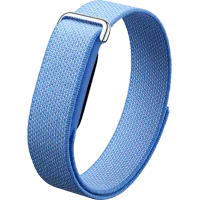
Google Fitbit Air
62bpm
Worn on the wrist
1 bpm apart
moonScan
61bpm
Phone camera only
A typical scan from the test
See all 150 scans
90%of scans were less than 3 bpm apart
Each dot is one scan, from closest to furthest apart.
- 135 under 3 bpm apart
- 10 3 to 5 bpm apart
- 5 over 5 bpm apart
Internal test with our current engine. Heart rate only. Google Fitbit Air is not a medical reference, and this is not a clinical study.
Why not a wearable?
Nothing to wear. Nothing to charge.
You buy a wearable, charge it and wear it every night. moonScan just needs your phone.
| moonScan | What matters to you | Oura, WHOOP, Fitbit, Apple Watch |
|---|---|---|
| One minute in the morning | Sleep | Worn every night |
| Nothing to charge | Charging | One more thing to charge |
| Heart rate, HRV and breathing | Signals | Plus sleep stages |
A general comparison. Features and prices vary by model. Trademarks belong to their owners.
Why we built it
It started in a hospital room.
Sabi, my fiancée, nearly lost her vision after a severe inflammatory attack.
For months, her body was struggling. We weren't looking.
 Before
I feel perfectly fine.
Month 1Stress
It's just a busy stretch at work. I'll rest at the weekend.
Month 2Panic attacks
My heart was racing again last night, out of nowhere.
Month 3Always tired
I slept nine hours and still woke up exhausted.
Month 4
Then one morning, she woke up almost blind.I'm fine. I just need a holiday.
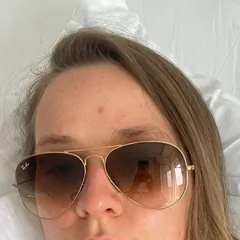 Hospital
Recovery
We started with the simplest thing: her sleep.
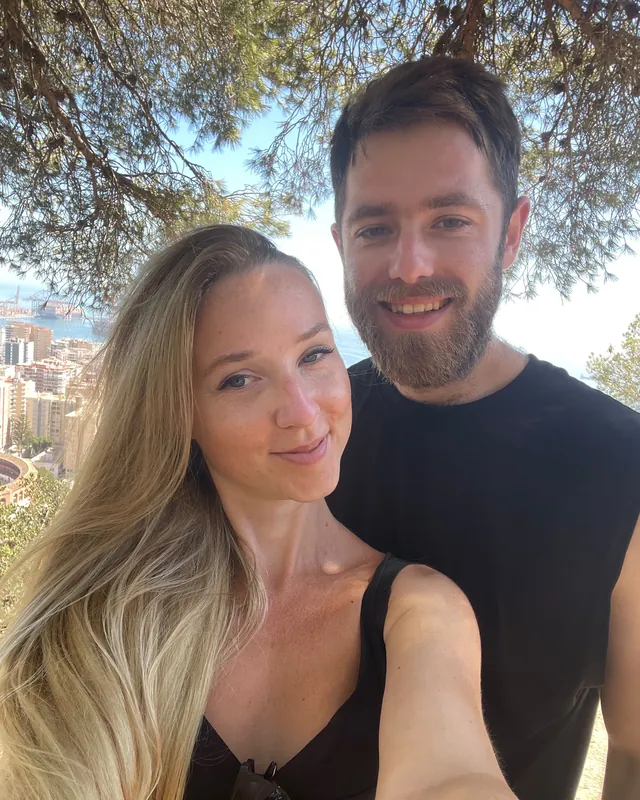 Today, healthy again
A note from Viktor
Seeing Sabi in that hospital bed changed how I think about health.
Her recovery is where moonlight began again. Now we want to help you understand your body, one morning at a time.
That’s why we built moonScan. So your mornings don’t go unseen.
 Viktor Bánczi, founder
Illustration. We never measured those mornings, so we can't know what they would have shown. Sabi's words are illustrative, not exact quotes.
moonScan is a wellness tool. It does not diagnose or prevent illness.
Pricing
Start free. Go further when you're ready.
Heart rate check-ins and your history are free for good. Paid plans include HRV and breathing when the signal is clear, and every upgrade as it's ready.
Free
0€forever
No card needed.
What's included
- Unlimited heart rate check-ins
- Unlimited history of your check-ins
Monthly
Most popular7,99€per month
Cancel anytime.
Card required. 0€ today, then 7,99€/month after 7 days unless you cancel.
What's included
- Everything in Free
- HRV and breathing when the signal is clear
- Every upgrade as it's ready, at no extra cost
- 14-day money back
Yearly
Best value49,99€per year
Save 45,89€ vs monthly
About 4,17€ a month. Renews yearly until you cancel.
What's included
- Everything in Free
- HRV and breathing when the signal is clear
- Every upgrade as it's ready, at no extra cost
- 14-day money back
Prefer no subscription? 9,99€ for one month, one payment, no renewal.
Already subscribed? Manage subscription
Prices include VAT. Monthly and yearly plans renew until you cancel; access lasts until the end of the paid period. The one-month pass is a single payment and does not renew. The free trial needs a card and moves onto Monthly after 7 days unless you cancel before then. 14-day money back on every paid plan: email us within 14 days of your first payment, no reason needed.
Questions
Quick answers.
Meet yourself in the morning
Start your morningpulse check.
Heart rate, HRV and breathing, in one calm minute each morning.
See plans and start freeFree to startNo card neededSee the plans